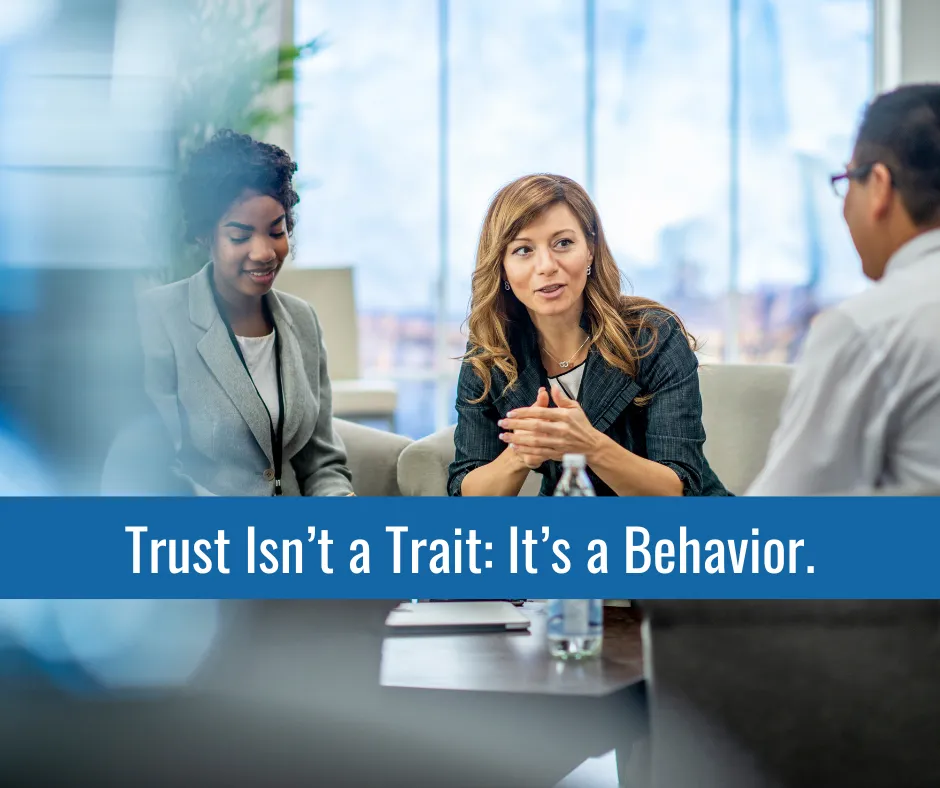
Building a Culture of Trust: One Micro-Behavior at a Time
The Invisible Equation of Trust
Have you ever walked into a room and immediately sensed who held the group’s attention and respect, without anyone saying a word?
Trust isn’t declared; it’s observed.
And it’s often granted in the smallest, quietest moments, the ones leaders sometimes underestimate.
A culture of trust in an organization isn’t built in the boardroom or through strategy decks.
It’s built in the micro-behaviors people experience every single day:
The pauses before responses.
The follow-through after meetings.
The eye contact that says “I hear you.”
And the tone that communicates curiosity, or judgment.
The Myth of Big Gestures
Many leaders assume credibility and trust is earned through big moves: delivering strong results, giving great presentations, or managing crises.
But here’s the reality: credibility begins to rise or fall in far subtler ways long before those moments arrive.
⚠️ A manager says, “I’ll get back to you,” but doesn’t.
⚠️ A leader checks their phone during a conversation.
⚠️ A director interrupts to “add value,” instead of listening to understand.
Each small breach erodes trust, and eventually, the foundation starts to show cracks.
The Micro-Behaviors That Build Trust
Credibility and trust grow in the spaces between your words; through consistent, aligned behavior that communicates integrity and care.
Here are a few examples of behaviors I see high-trust leaders enacting:
They follow through on what they say, even when it’s inconvenient.
They pause before responding to ensure their words match their intent.
They communicate transparently: not perfectly, but honestly.
They acknowledge emotions, including their own, instead of hiding behind a mask of professionalism.
They ask questions more than make proclamations
These behaviors seem small, but that’s the point. They’re repeatable, observable, and contagious.
When trust becomes part of the culture, not just individual, the organization transforms.
Some Micro-Behaviors Backfire
Here’s the tricky part: we are often unaware of our own weak links.
Leaders who are defensive, dismissive, or disengaged are often unaware of the impact those behaviors have on others.
The disconnect?
Their intent and impact don’t match, and that gap inevitably damages trust.
If you’re hearing feedback like “You seem unapproachable,” “People hesitate to speak up,” or “Your team’s holding back,” these are signs that your micro-behaviors may not be in alignment with what you intend to communicate.
Building a Culture of Trust
The good news? Trust can be rebuilt if it’s been damaged. But it takes time.
You can start by asking trusted peers or mentors:
What behaviors build trust in you?
What do I do, intentionally or not, that might be diminishing others’ trust in me?
Then, reflect daily:
Did my tone match my message?
Did I listen fully, or just wait to respond?
Did my actions today reinforce trust, or erode it?
Being trustworthy isn’t about being perfect. It’s about being congruent.
When your tone, body language, and behavior align with your values, you create the kind of consistency people can rely on.
That’s how you contribute to building a culture of trust.
Closing Reflection
Trust can be destroyed suddenly, but it can also fade quietly through random habits of everyday communication.
However, it can only be restored one intentional behavior at a time, time after time.
So ask yourself:
What are your micro-behaviors communicating and are they contributing to a culture of trust?