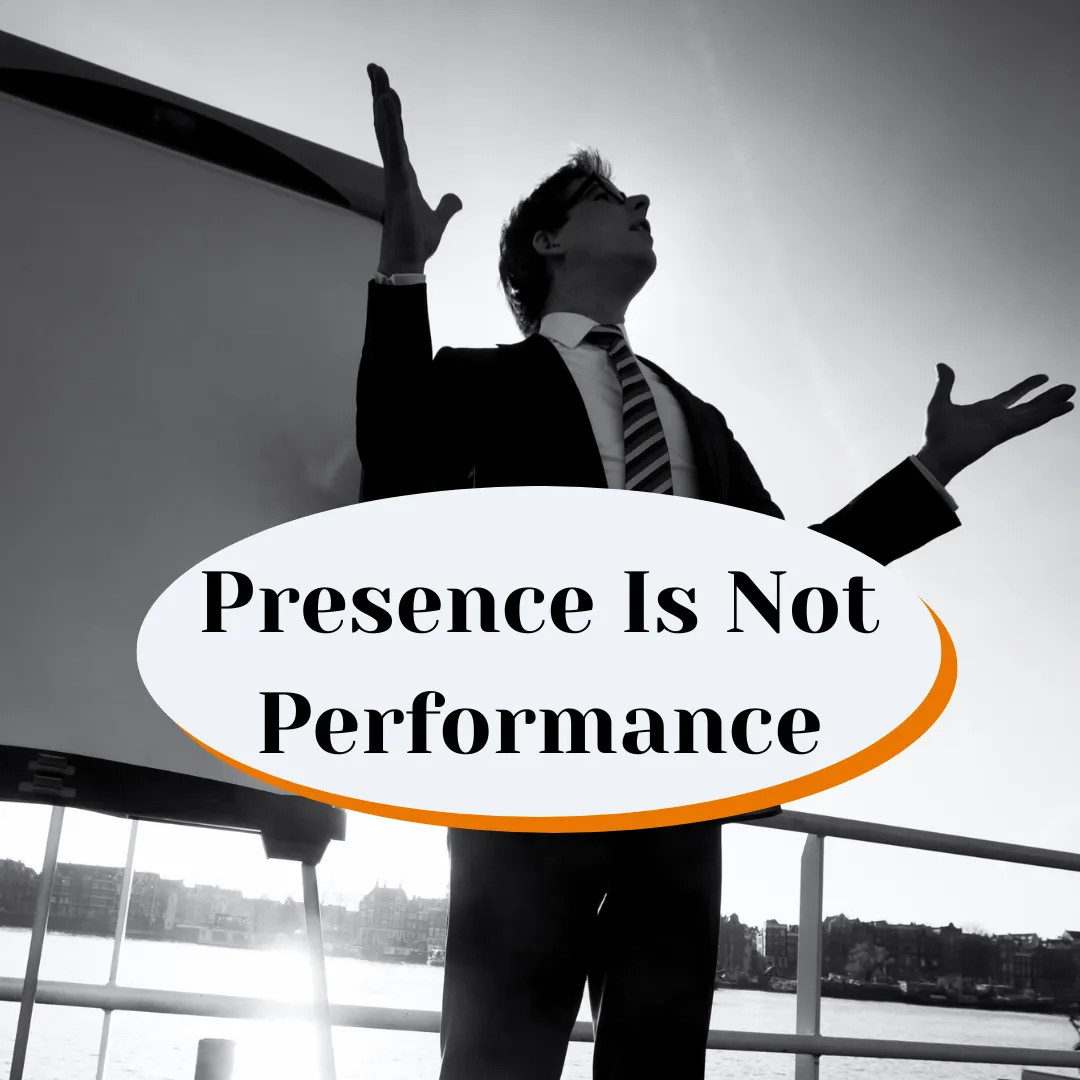
Performing vs. Presenting: You Don’t Have to Fake It to Lead
You’ve probably heard it:
“Just be confident.”
“Own the room.”
“Turn it on.”
In high-stakes situations, whether it's a boardroom presentation, a company all-hands, or a team meeting, there tends to be an invisible pressure to perform. To show up like the leader you want people to believe you are.
But what if the performance is what's holding you back?
If you’re introverted, shy, or someone from an underrepresented background, you might feel that leadership presence is a role you have to play, instead of a strength you’re allowed to own.
Let’s change that.
The Emotional Toll of Performative Professionalism
Performative professionalism refers to acting out what is perceived as “professional” behavior in order to meet external expectations, often at the expense of authenticity, well‑being, or inclusion, rather than genuinely embodying one’s competence, ethics, and self-respect.
Let’s face it. Wearing a mask is exhausting.
You have to rehearse your tone, your posture, your small talk. All to try to fit into a mold that was not made with your strengths in mind. Somewhere along the way, you disconnect from yourself.
This is what I’ve heard from clients:
“I feel robotic when I speak.”
“I sound overly rehearsed, not real.”
“I know what I’m talking about, but I still feel like I’m pretending.”
Performing might get all of us through a moment. But having to do it all the time drains your energy, and chips away at your confidence, and your credibility.
People can tell when something’s off.
Presence vs. Performance
Here’s the truth: You don’t need to perform to lead.
You don’t need to fit a certain mold to lead with authority.
You need to develop your own style of presence.
Presence isn’t about perfectly rehearsed lines or contained body language.
Presence comes from:
Knowing your value
Communicating with intention
Showing up grounded, even if you’re nervous
When you stop performing and start presenting from a place of your truth, you create real connection. People don’t just hear you. They trust you.
How to Shift from Performance to Presence
1. Know your audience and key message.
Clarity is calming. When you know what you really want to say, and what you want them to hear, you can be flexible and authentic, even if you get off track.
2. Ground yourself before you speak.
Before any high-stakes moment, take 30 seconds to drop into your body. Feel your feet on the floor. Breathe deeply into your belly. Remind yourself: “I don’t have to prove anything. I’m already enough.”
3. Drop the presentation persona.
Be the best version of you.
Use your real voice. (Just make sure it’s strong because you are breathing from your diaphragm).
Make direct eye contact.
Use your hands to support your verbal message.
Being yourself doesn’t dilute your authority, it strengthens it.
4. Reflect with curiosity.
After a meeting or talk, don’t just critique yourself.
Ask someone you trust: “Did I seem connected to what I said?” “Did I show up as me?” “What did I do that helped get my message across?” “What didn’t help?”
You Deserve to Lead without Pretending
The best leaders I know aren’t cookie-cutter versions of the “perfect” leader.
They’re grounded. Thoughtful. Honest. Real.
If you’ve felt pressure to “perform” in order to be seen, heard, or respected, especially in environments that weren’t built for your natural communication style, you’re not alone.
Know that there is another way.
You can lead without faking it.
You can present without performing.
You can build trust and influence by being fully yourself.
✅ Want help building your own style of leadership presence?
Check out my Coaching Packages
📘 Or schedule a Discovery Call and let's chat about the best coaching option for you.