Stop Reading Your Slides: Build Better Presentations | Boldt Global
You are four slides into your presentation, on a topic that matters, when you notice a particular kind of stillness in the room. Unfortunately, it’s not the audience paying rapt attention to what you are saying. It’s something flatter than that.
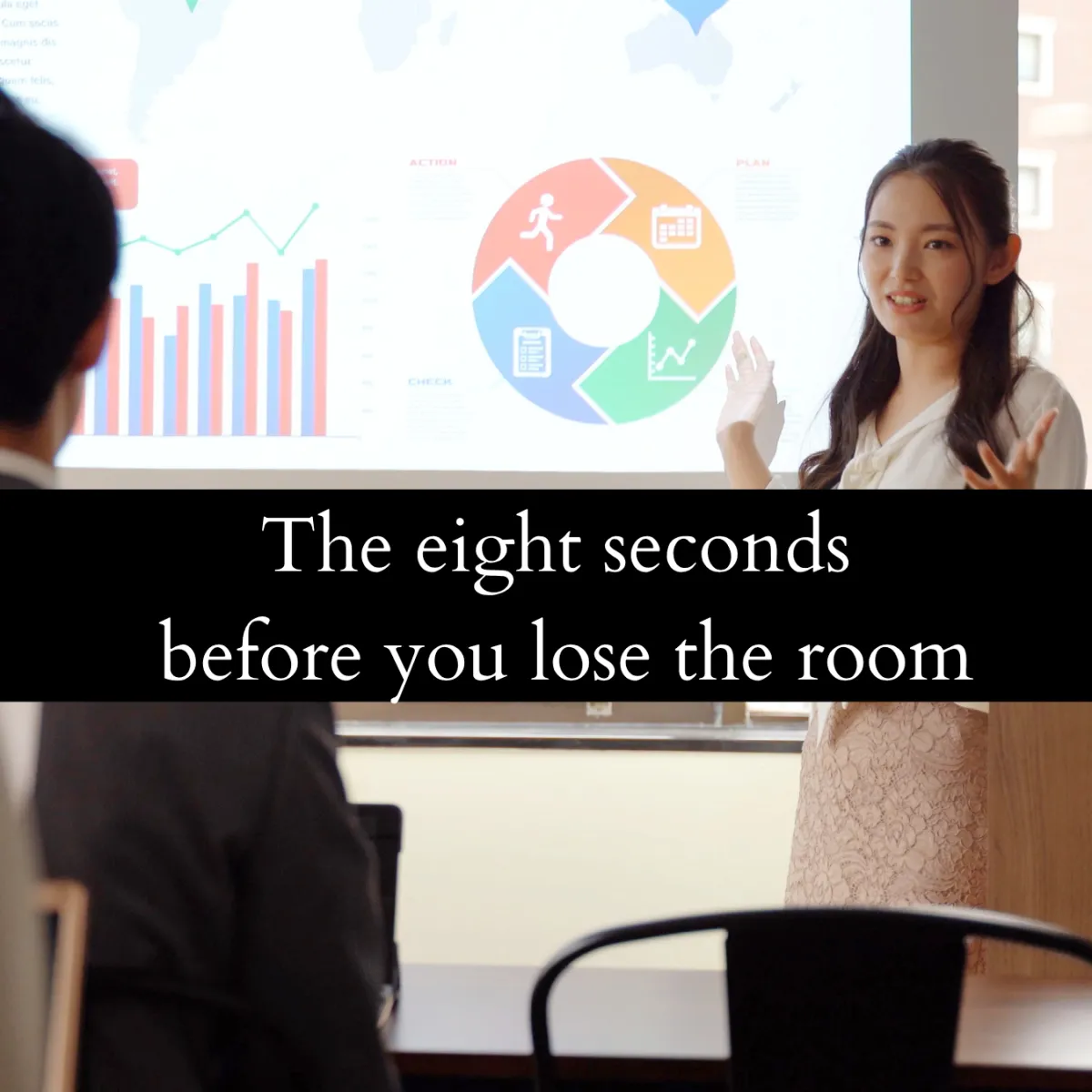
What is happening is that your audience finished reading your slide about eight seconds after you clicked on it. You are on the second bullet. For the next forty seconds you are narrating a document they have already read.
This is not a delivery problem. It is a slide design problem that started weeks earlier, the moment you opened PowerPoint and started thinking about what you wanted to say.
A question worth sitting with
If someone can read your deck on their own and walk away with everything they need, why are you in the room?
That is not a rhetorical question. It is a test, and many executive presentations fail it.
There is a place for decks that are made up of self-explanatory slides: Full sentences, every caveat, the supporting data, a summary of the summary. Those decks are built that way for a reason. The deck is circulated afterward to people who were unable to attend. In some companies, decks are circulated before a presentation so attendees can be prepared to ask questions. And investors sometimes ask entrepreneurs to send a deck before they set up a meeting. These decks have to stand on their own.
Here’s the key thing to understand: a deck that stands alone and a deck that needs a presenter are doing two different jobs and they need to look different. If you use one deck to do both jobs, the presentation deck is almost always the loser.
The deck you forward is not the deck that works in the room.
The fix is not to just minimize words on the slides in the stand alone deck. That generally doesn’t work. The fix is to determine which deck you need to build based on your goals, then build the other deck separately. Once you’ve built the talk, build the presentation deck first, then building the denser ‘to forward’ version. If you build the denser deck first, you will be tempted to leave in too many words to make an effective presentation deck.
Reading your slides is not presenting
Almost nobody believes they do this. Almost everybody does some version of it (even me!)
It’s especially tempting when we are under pressure. The stakes are high, you are worried about leaving something out, so the words go onto the slide as insurance. Then in the room you read them, because they are right there, and looking away feels like stepping off a ledge.
What the audience experiences is a person facing sideways, narrating text they already finished reading.
The tell is where your eyes go. If you are turning toward the screen to find out what comes next, the slide is running the presentation and you are the add-on.
There is a test for this that takes about five minutes:
Close the pptx file and say what you want to say out loud without looking. It doesn’t have to be word for word perfect. Just the shape of it: the points you are making in the right order, and why each point follows the one before. If you cannot do that, you have not yet learned your material, and the text on the slide will not cover the gap. Audiences know you don’t know it, even when they don’t say it.
You don’t build forty slides because your audience needs forty slides
You build them because you are afraid you’ll forget.
I say that with empathy, because it is one of the most human things I see in this work. You are anxious about a big upcoming presentation, and building the deck feels productive. So you just keep building. Another slide of background. An appendix, just in case. A backup slide for the question nobody is going to ask.
Building the deck first feels like preparation, and it is. But it’s not the best place to start. Creating the deck is helping your nerves, but it is also absorbing the hours that should go into creating your script. If you start with audience, goal and script, you will create a leaner presentation that gets your point across more effectively.
Nobody has ever walked out of a presentation wishing there had been more slides.
But plenty of people have walked out wishing the speaker knew their material better.
Back in the day of the “overhead projector” (I know, I’m dating myself), audiences could tell how long a presentation would be by the number of “overhead slides” a presenter showed up with. I remember college professors with 2-inch even 3-inch binders full of the very slim slides. As students we would resign ourselves to a long, boring lecture.
Today, no one knows how many slides you have before you start because they are hidden in your computer. But that doesn’t mean they love long, laborious talks!
A Rule to follow: Build the talk, then build the deck
Most people start a presentation by opening PowerPoint. That one habit explains a surprising number of bad talks.
If you start with the slides, the structure of the talk becomes whatever lends itself to being put on a slide. Slide one is the agenda, because slide one is always the agenda. Then background, because you have to give background. But does the background need to be on a slide? Maybe not in words. You add in some data, but is that the right place for it?
By slide fifteen there is an argument in here somewhere, but it might have fallen into place randomly rather than being placed by design.
Try the reverse. Before you open PowerPoint, answer two questions on paper. What is the one thing this audience needs to walk out believing? And what is the shortest path from where they are now to there?
That is the structure of your talk.
Then, and only then, ask which of those points genuinely needs visual support. Some points will, and some won’t. A trend over time is easier to see than to describe. A comparison lands faster side by side. A photograph of the thing you are discussing is worth more than three sentences about it. Some points need nothing but your voice to communicate them.
Your slides should not be your notes, written large on the wall behind you, where the audience can read them faster than you can say them.
The purpose of slides
Slides do a small number of things extremely well. They show what words are slow to communicate: shape, scale, change over time, comparison, and the object itself.
What slides are not good at is presenting your argument for you. Your job is to present your argument and persuade your audience of its value. That is the reason you were invited into the room rather than asked to just send a deck.
How a coach can help
It’s not easy to stop yourself from reading your slides. Your eyes are pulled to the words by your brain. It’s also difficult, when you are reading, to feel the moment when you lose the audience. And when you’ve prepared 40 slides, it’s tough to tell which of them could be cut. They all seem relevant.
That is where an outside eye and ear have value. A lot of what I do with executives is deceptively simple. I watch and listen to them present the slides. Then I ask them to give the presentation again, without looking at their slides. What survives is the final presentation. What does not survive didn’t need to be there in the first place.
Remember, your material is important, but the audience comes for the person, not the deck.
Ready to find out what your talk sounds like without the deck?
If you have a significant presentation coming up and you would rather discover this before you are standing in front of the room, let's talk.