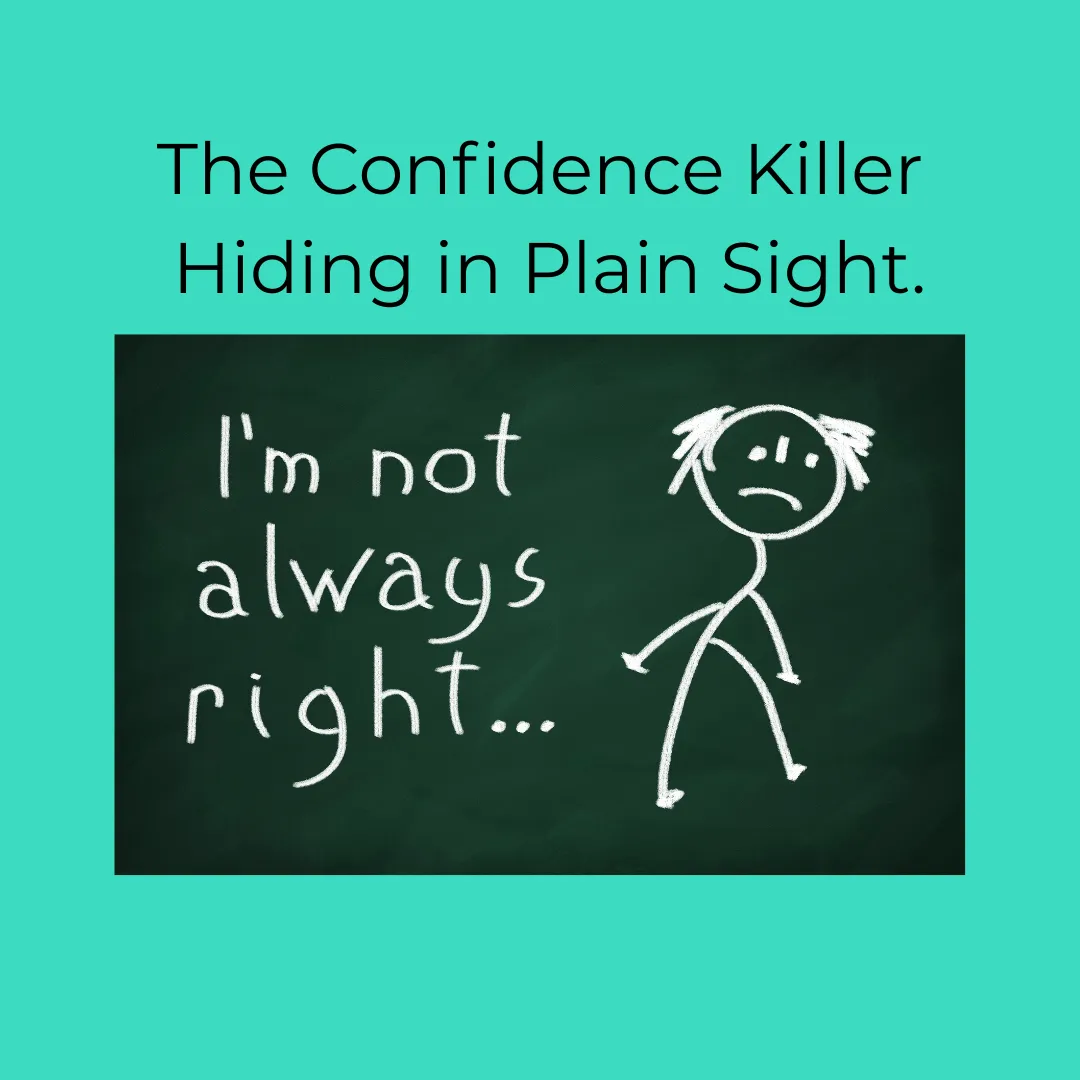
The Fear of Being Wrong Is Costing You Influence
Have you ever noticed that the most knowledgeable person in the room is not always the most influential?
One might think that expertise would automatically make someone persuasive. But the reality is, that connection isn’t automatic. In fact, some of the smartest, most capable professionals I know struggle to persuade others. Not because they lack knowledge or experience, but because they are afraid of being wrong.
Perfectionism is often what is driving this fear. It causes really smart people to be so concerned about saying something inaccurate, incomplete, or imperfect that they unintentionally weaken their own message.
I frequently see this with the leaders, managers, and technical professionals I work with. They overthink, hesitate and often end up hedging their recommendations. They spend so much mental energy protecting themselves from being wrong that they fail to communicate with conviction.
When that happens, people stop following their lead.
What the Fear Sounds Like in Your Head
Many leaders don’t openly admit they are afraid of being wrong, but the fear undermines them in subtle ways.
Do any of these sound familiar?
"I need more information before I go public."
"I need to think about this a little longer."
"What if I don’t have a ready answer to a question?"
"What if I make a recommendation that turns out to be wrong?"
"What if someone openly disagrees with me?"
On the surface, these thoughts might sound reasonable and sometimes they are. But the reality is that leadership often requires speaking before you have all the answers. These questions can become a form of self-protection that keeps you from communicating effectively.
What It Sounds Like Out Loud
Oftentimes you may not perceive the fear yourself, but it sneaks into the way you speak.
Fear is present in phrases like:
"I could be wrong, but..."
"This may not be the best idea..."
"I'm not sure, but..."
"Maybe we should..."
"I’m not sure this makes sense..."
All of these phrases diminish whatever comes after them. They diminish you too. They send a message to your audience:
“Don’t fully trust what I’m about to say.”
You've invited people to question your recommendation before they've had a chance to evaluate it. Over time, telegraphing your fear quietly erodes your credibility and influence.
A Moment It Cost Someone the Room
I worked with a manager, I'll call him David, who understood his division's numbers better than anyone in the building. Leadership was deciding where to invest for the coming year, and David had built a strong case for shifting resources toward a new market segment. He'd done the analysis. He knew it was the right move.
But when he presented it to the executive team, he opened with, "I'm not sure, I could be wrong, but I think we should consider moving into this new segment."
Another manager presented after him. She had not done nearly as much homework, but she said, "Here's where I'd put our resources next year, and here's what it will get us." She was less prepared, but she sounded certain. And she was also the one leadership remembered. They funded her plan.
David wasn't passed over because his strategy was weaker. It was stronger. He was passed over because he invited the room to doubt him before he'd made his case. The hedge didn't protect him, it cost him the budget, and the credibility that would have come with winning it.
Persuasive Leaders Take a Position even When Uncertain
Many professionals mistakenly believe that persuasive communication requires complete certainty. It doesn't. Persuasive communication requires clarity. You don’t have to guarantee that your recommendation is perfect. You simply need to communicate your thinking clearly so others can evaluate it.
Strong leaders are willing to take a position. They are willing to say: "Based on the information we have, this is my best recommendation." They are not claiming to know everything or being absolutely sure. They are demonstrating confidence in their ability to analyze the information available and make a decision.
That is what leadership sounds like.
Calibrated Uncertainty vs. Hedging
Calibrating uncertainty is a professional virtue because it informs the audience. "I'd put this at 70%, and here's what would change my mind…" tells them exactly how much weight to give it. Hedging doesn’t inform, it only protects the speaker. "I could be wrong, but..." tells people nothing. The goal is sharing something useful, not just language that nullifies whatever comes after it.
What to Say When You Don't Have All the Answers
The next time you find yourself hedging, try replacing:
"I could be wrong, but..."
with:
"Based on what I know today, here's my recommendation…"
Instead of:
"I'm not 100% sure..."
try:
"Here's how I'm thinking about it..."
Focus on contributing what you do know, instead of watering down your response until you have all the answers.
Leadership communication is not about perfection. It’s about communicating effectively in spite of not being perfect.
The Most Influential Leaders Aren't Fearless
They have simply learned to harness their perfectionism and acknowledge that making mistakes is part of being a leader.
They also understand that influence requires visibility. You can’t persuade people if you are unwilling to take a position until you are sure.
The next time you're tempted to hold back or speak tentatively because you might be wrong, remember this:
Just because you are the most knowledgeable person in the room doesn’t mean you are the most influential because knowledge doesn't carry influence unless you are willing to stand behind it
How a Communication Skills Coach Can Help
Working with a communication skills coach can help you uncover the hidden fears and the communication habits those fears foster that may be limiting your influence.
By providing objective, empathic feedback, I can help you identify where fear is leaking into your language and delivery, and ultimately undermining your influence.
You do not need to eliminate uncertainty to sound confident. You need to learn how to communicate what you know clearly, take a position when it matters, and express uncertainty without diminishing your credibility.
If you are ready to communicate with greater confidence and influence, schedule a complimentary communication coaching session with me.