The Myth of the Natural Communicator
“I’m just not a natural communicator.”
If you’ve ever said that out loud, or even thought it, you’re not alone.
Here’s what I want you to know: that belief might be holding you back more than your actual skills.
It is true that some people seem to be born with a silver tongue.
But most great communicators?
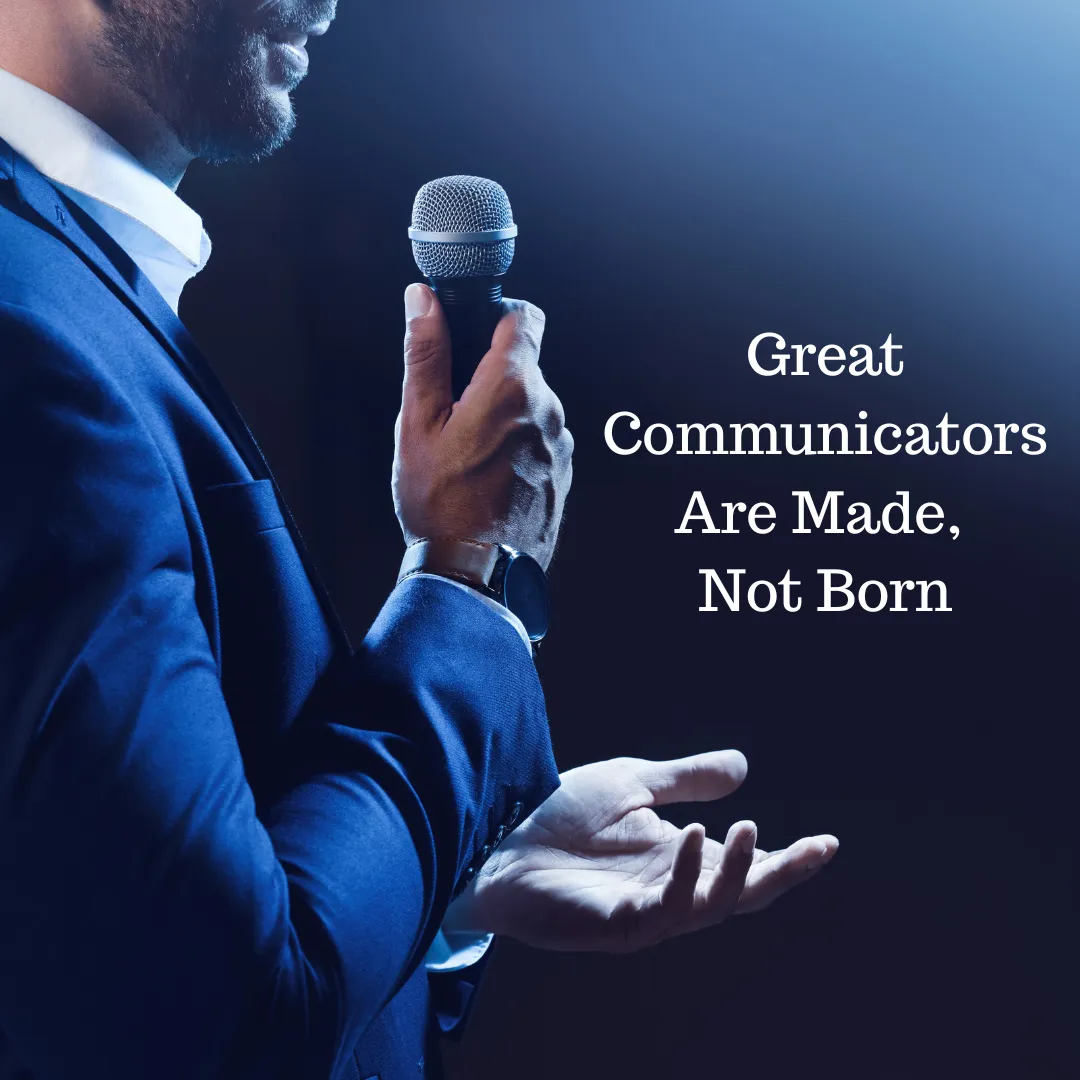
They learned. They practiced. They grew.
And you can too.
Where the Myth Comes From
The “myth of the natural communicator” goes all the way back to the “born vs. made” debate of classical rhetoric.
More modern ideas about charisma and leadership being trait-based, inborn personality characteristics have kept it alive.
And mass media’s tendency to showcase only polished performances (not the coaching, rehearsal, and editing behind them) have also contributed.
Some People Might Be Luckier than Others
It is true that some people grow up in families where conversation and storytelling are part of daily life and others get early training through things like junior theater, debate, or choir.
But many people don’t grow up with exposure to good communication skills. Many people never even take a real communication class.
We are expected to pick up good communication skills and habits as we go, seemingly by osmosis.
It’s no wonder that many intelligent, high-performing professionals struggle with clarity, confidence, and presence, especially when the pressure’s on.
The Good News: Communication Is a Skill, Not a Trait
Think about it this way:
You wouldn’t expect to walk into a gym for the first time and deadlift your body weight with perfect form.
Or to run a marathon without training.
Or sit down at a piano and play a song perfectly without lessons or practice.
Yet when it comes to communication, many of us carry shame or embarrassment about not being perfect at it.
Let’s drop that.
You’re not defective.
You simply haven’t acquired the right tools… yet.
A Client Story That Proves It
A few years ago, a client came to me, knowing she lacked skills, but unsure she could improve.
She told me straight out: “I know myself. I don’t always apply myself.”
I met her where she was. We worked with presentations she needed to make so she was motivated to do the work.
12 sessions later? She was getting compliments from her colleagues, who noticed the change before she did.
They noted that she was calmer. Clearer. More confident.
Not because she changed who she was.
But because she tapped into a skillset she didn’t know she had, and hadn’t been taught how to use.
If You Doubt that You Can Become a Good Communicator…
Let me say this as clearly as I can:
You do not have to be a “natural communicator” to become a powerful one.
You just need:
Awareness of what’s not working
Willingness to shift some habits
Tools and support to practice
And when you get that support?
You’ll stop second-guessing yourself.
You’ll feel your presence in the room rise.
And others will feel it too.
Are You Ready to See What’s Possible?
If you’ve ever wondered if you could speak up without spiraling, clarify your message without rambling, or feel more grounded when it matters most, I’d love to talk.
Let’s see what’s possible when you stop hiding behind not being “natural” and start learning how to be intentional.